
Centre Project: Weather Systems
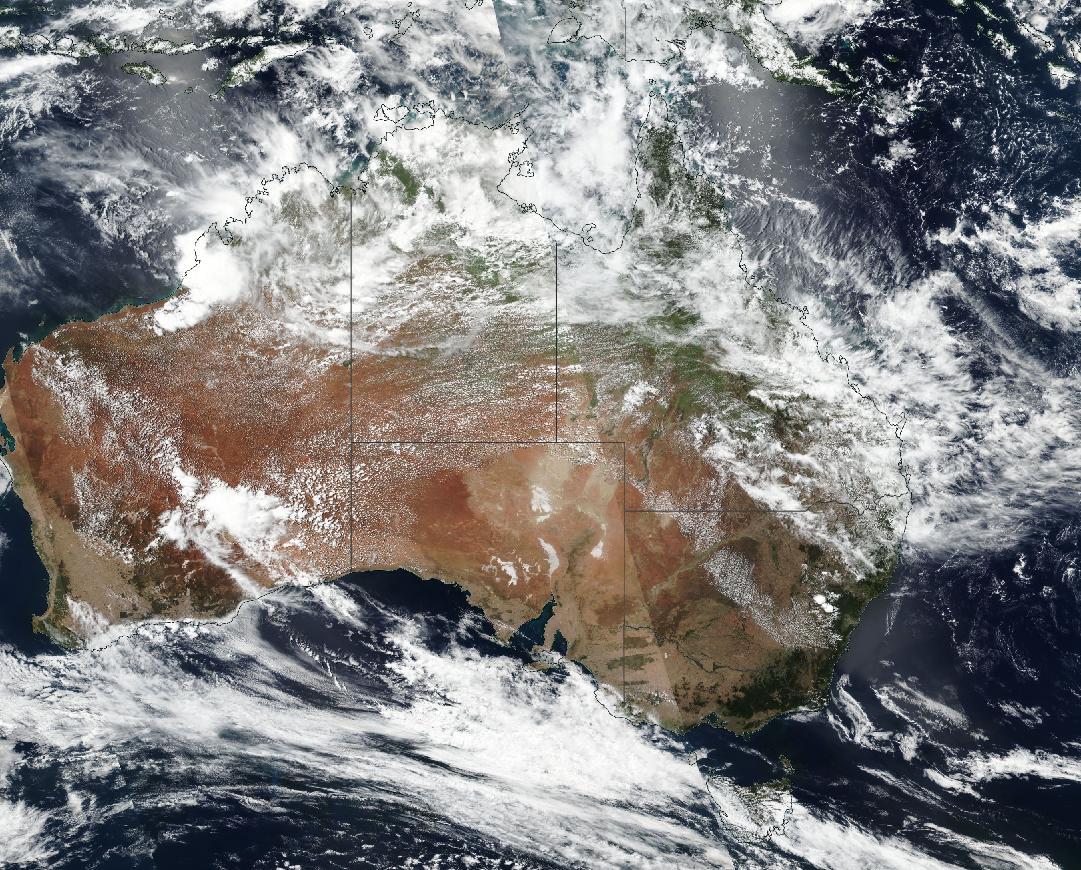
Weather systems are the building blocks of our weather and climate. Wind, rainfall and sunshine are all produced by weather systems, such as the high and low-pressure systems, tropical cyclones and fronts shown on television weather forecasts.
These weather systems do not exist in isolation, and often strongly interact. For example, strong tropical lows and cyclones in Australia’s north in summer have been associated with prolonged heat waves in the south.
This project aims to develop new ways to identify and understand weather systems, check if our computer models can simulate them accurately, and find out how they might change in a warmer climate. Given their central role in creating the weather, how weather systems behave in the future will determine how climate change affects rainfall, drought, and sunshine across the continent.
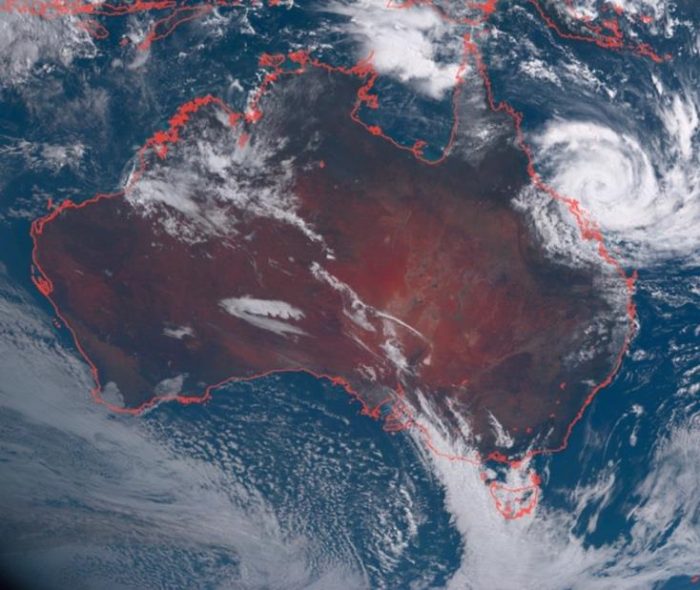
While weather systems occur in the atmosphere, they are both shaped by and shape the ocean and the land. This makes uncovering their future behaviour an interdisciplinary challenge. Through this interdisciplinary approach, the work in this project aims to increase our understanding of how weather systems shape current and future surface weather, and how they interact with climate variability and change.
To know how our weather will change in a warmer world, we have to be able to understand and accurately simulate weather systems.
Knowledge Gaps
We are only just beginning to understand how clouds and rainfall interact with and affect weather systems; this interaction becomes increasingly important as the world becomes warmer and the atmosphere becomes more moist.
There is still more to be learned about the difference between weather in tropical regions and weather just outside this area, known as the extra tropics or mid-latitudes. The Australian continent includes both of these regions, so we need algorithms (mathematical equations and computer programs) that can better detect and track Australian weather systems and understand how they interact.
Benefits
It is not just our scientific knowledge that will benefit from a unified understanding of Australia’s weather systems. There are practical implications too. For example, the distribution of wind resources across the continent depends on the path and type of weather systems that cross it.
Goals & Objectives
- Develop innovative algorithms to detect and track weather systems in the Australian region;
- Develop a comprehensive understanding of the physical and dynamical processes that determine weather system behaviour;
- Develop the first definition of continent-wide Australian weather regimes through a unified tropical-extra-tropical circulation framework.

Meet the team
Dr Michael Barnes
Senior Research Fellow
Monash University

Philip Blackberg
Student
Monash University

A/Prof Ailie Gallant
Deputy Director
Monash University

Nick Grosfeld
Student
UNSW

Dr Chiara Holgate
Senior Research Fellow
ANU

Professor Christian Jakob
Director
Monash University

Dr Chenhui Jin
Research Fellow
Monash University

Dr Sugata Narsey
Associate Investigator
Bureau of Meteorology

Tony Rafter
Student
University of Melbourne

Reyhan Respati
Student
Monash University

Professor Liz Ritchie-Tyo
Deputy Director
Monash University

Prof Steven Siems
Associate Investigator
Monash University

Dr Martin Singh
Chief Investigator
Monash University

James Thompson
PhD Student
University of Melbourne